
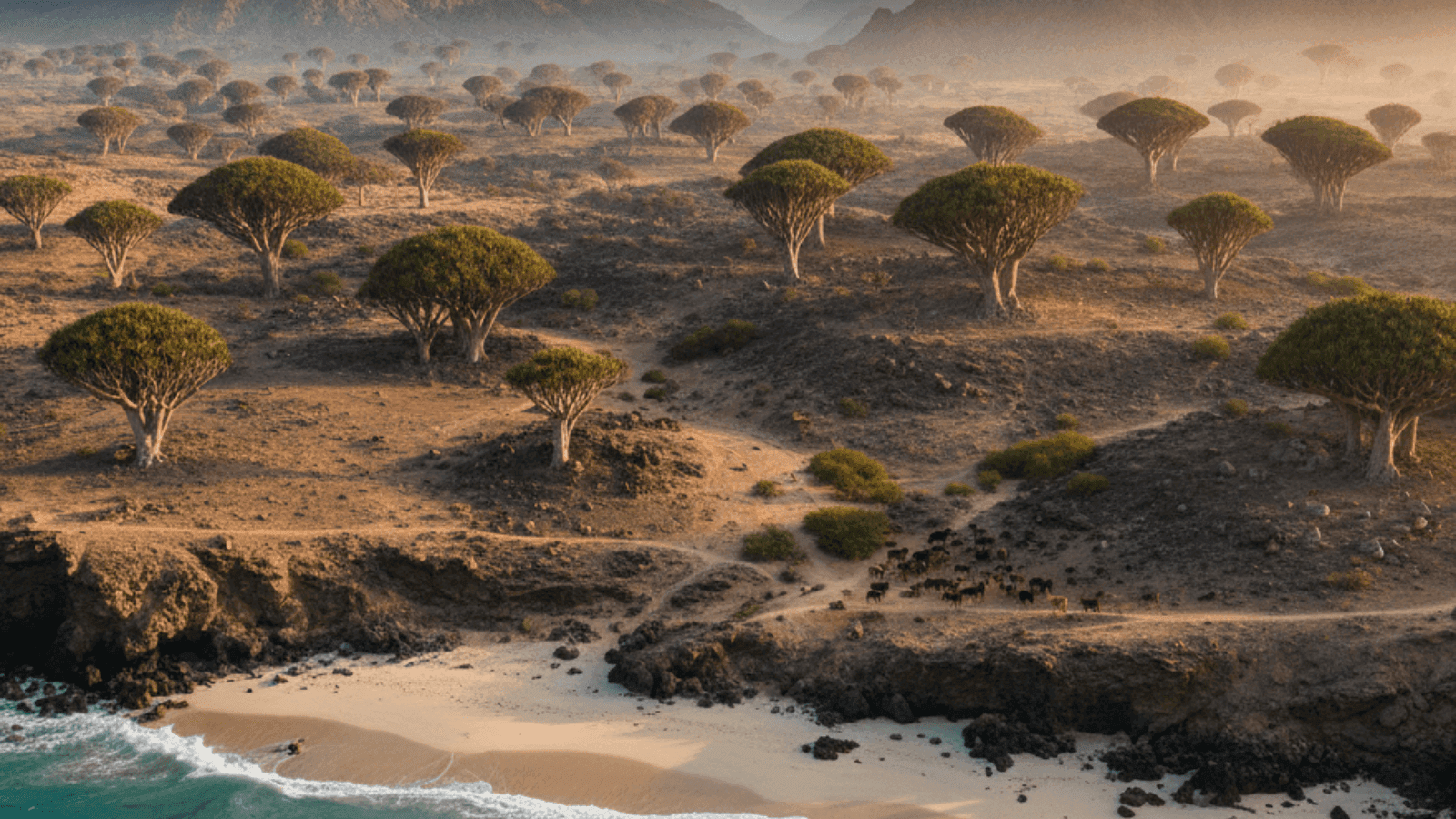
Socotra: The Island That Feels Like Another Planet Today!!!
The trees look like they were designed without ever seeing Earth.
Why Socotra looks so alien
Isolation changed everything here. Floating in the middle of the Arabian Sea between mainland Africa and Yemen, Socotra has been cut off for millions of years. Plants and animals evolved on their own timeline, untouched and unconcerned with the rest of the planet.
The dragon’s blood tree is the first thing most travelers remember. Its umbrella-shaped canopy spreads wide and flat, like a mushroom frozen mid-growth. When cut, it bleeds red sap once used as medicine, dye, and even varnish.
More than a third of Socotra’s plant species exist nowhere else. The ground shifts from white limestone plateaus to sharp black rock, then suddenly to blinding white sand dunes that slide straight into blue water.
Wildlife and marine life you will not see anywhere else
Bird calls carry across open valleys, but the species are unfamiliar. The Socotra starling flashes metallic green in sunlight, while the Socotra sunbird moves quickly between flowers.
Reptiles dominate the quieter spaces. Small geckos blend into rock and bark, and many of them exist only here. Coral reefs wrap around the island in dense formations, supporting reef fish, rays, and sea turtles. Dolphins appear regularly, sometimes following fishing boats or moving in groups near the coast.
Life on the island and the people who call it home
Time moves differently in Socotra’s villages. Goats wander freely across roads, and fishing boats rest on quiet beaches until early morning. Many residents still rely on fishing, date harvesting, and herding for their livelihood.
The main town, Hadibu, is small and functional. Shops sell basic supplies, and buildings remain simple. Outside town, people live in scattered settlements, often in homes built from stone or concrete.
Socotris speak their own language, unrelated to Arabic. It has survived through oral tradition, passed down across generations without being formally written for most of its history. Despite its remoteness, the island earned global recognition. UNESCO listed Socotra as a World Heritage Site because of its biodiversity and ecological importance.
Electricity and internet access exist, but they are limited. Many areas still rely on natural rhythms rather than digital schedules.

Best time to visit and weather patterns
Weather decides everything on Socotra. From October to April, temperatures stay comfortable, usually between 20°C and 30°C. The skies remain clear, and the sea stays calm enough for swimming and boat travel.
Summer brings stronger winds and harsher conditions. From May to September, monsoon winds hit the island with force. Flights often stop completely during this period, and travel becomes nearly impossible. Dry air keeps humidity lower than expected, even when temperatures rise. Nights can cool down quickly, especially near open coastlines or elevated plateaus.
The light changes constantly. Early mornings soften the landscape, while late afternoons turn rocks and trees into sharp silhouettes.
How to reach Socotra
- Most travelers fly on charter flights operating from Abu Dhabi directly to Socotra’s airport
- Entry requires prior permission arranged through authorized Yemeni travel operators
- Independent travel is not permitted, and visitors must join organized tours
- Flights do not operate year round due to seasonal winds
- Arrival happens at a small airport with minimal facilities
Things to keep in mind before traveling
- Cash is essential because ATMs are rare and card payments are almost nonexistent
- Accommodation often involves camping in protected areas or basic guesthouses
- Mobile network coverage is weak or absent outside towns
- Respect for local customs matters, especially in clothing and behavior
The ecosystem is fragile, and removing plants, shells, or natural materials is prohibited. If Socotra is on your mind, the stay should feel just as memorable as the island itself. Neomaxer helps you find distinctive stays that match places this special, so every part of the journey feels thoughtfully chosen.









